The following information has been kindly provided by Malcolm Pembery of DSPC who would in turn like to credit Peter Martin retired scull maker.
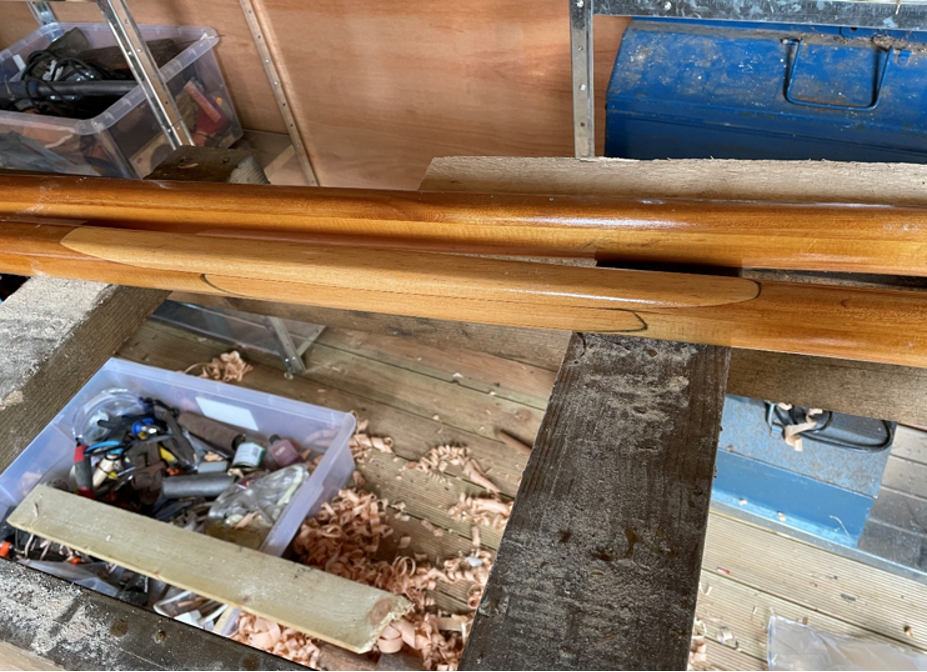
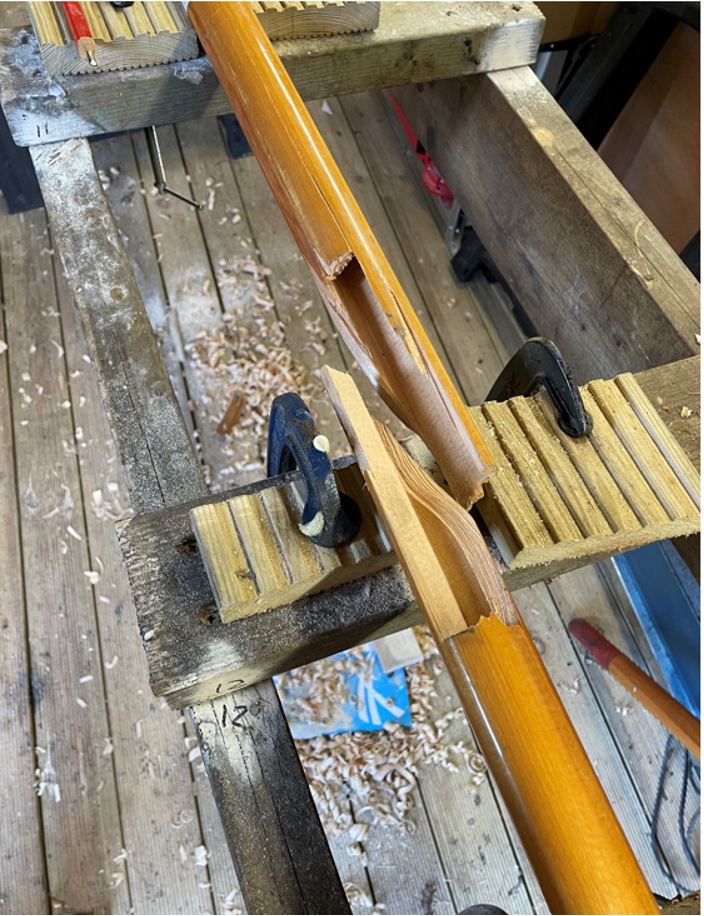
The example here relates to a broken tubular construction skiff sculling blade.
Equipment needed:
- Fast Back or similar to provide a rigid structure which can have blocks screwed into
- Epoxy resin (West Systems)
- Clamps
- Saws, chisels, planes
- Masking tape pencil/charcoal
Wood:
Sitka spruce (expensive) or
Close straight grain Douglas Fir without knots:
Sykes Timber, Carlyon Rd,, Atherstone CV9 1JD
Phone:01827 718951
Process:
- Set up fast back and lay good blade on it.
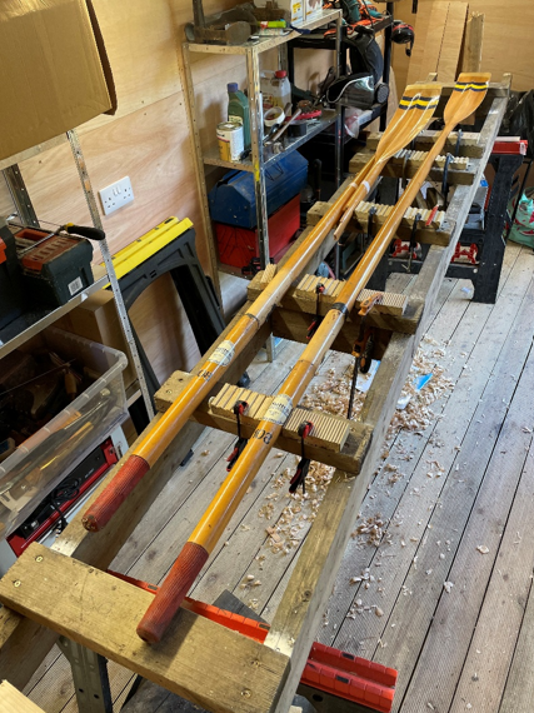
2. Using blocks, create a pattern of the good blade, for length and sides
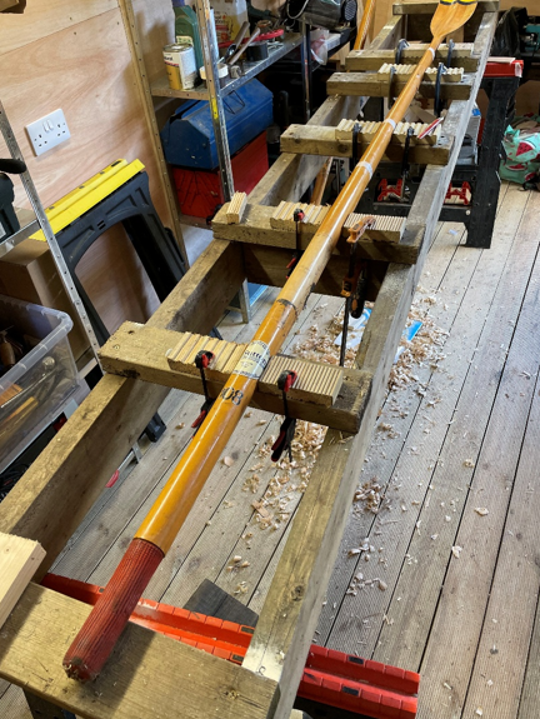
3. Remove blade and fit the broken blade in to get alignment, then remove, glue the broken area and re fit the broken blade. Make sure the glue doesn’t adhere to the fast back, and clamp the blade down to ensure straightness.
4. Depending on the blade construction, remove a portion of the blade allowing a scarf angle of at least 8 : 1 on either end. The length of this should be around 2 to 3 feet, but open to practical requirements.
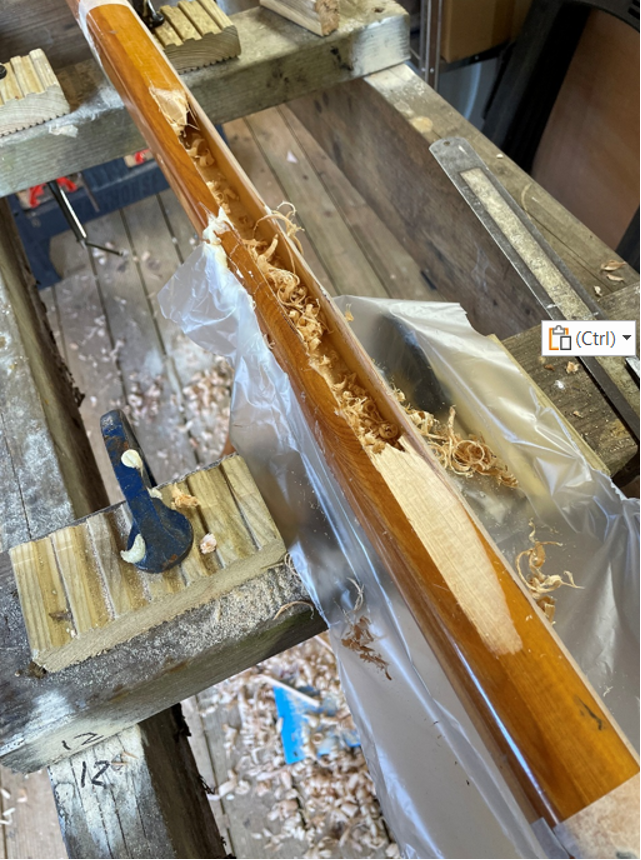
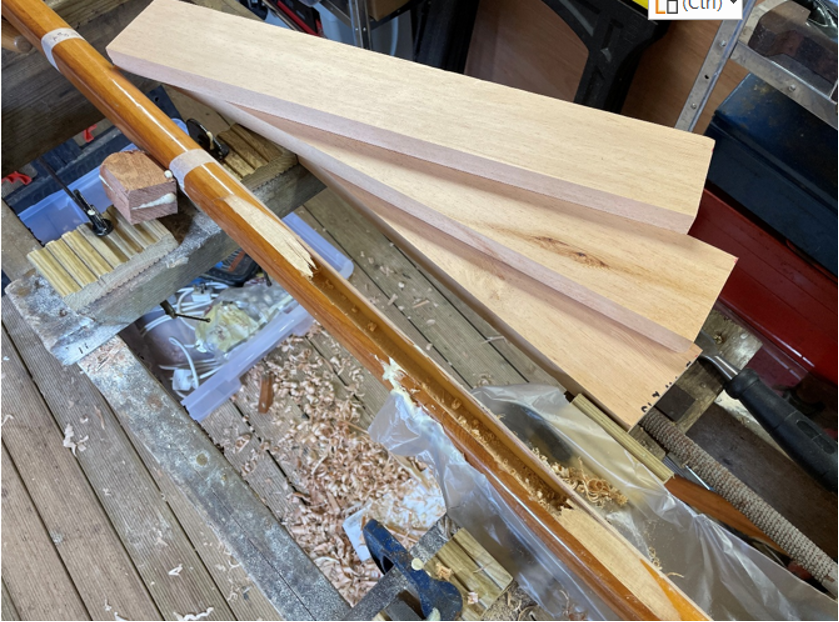
5. Cut a length of Douglas Fir to cover the removed wood, and shaped to fit the removed section and scarfs. Allow plenty of wood above the normal height of the blades loom.
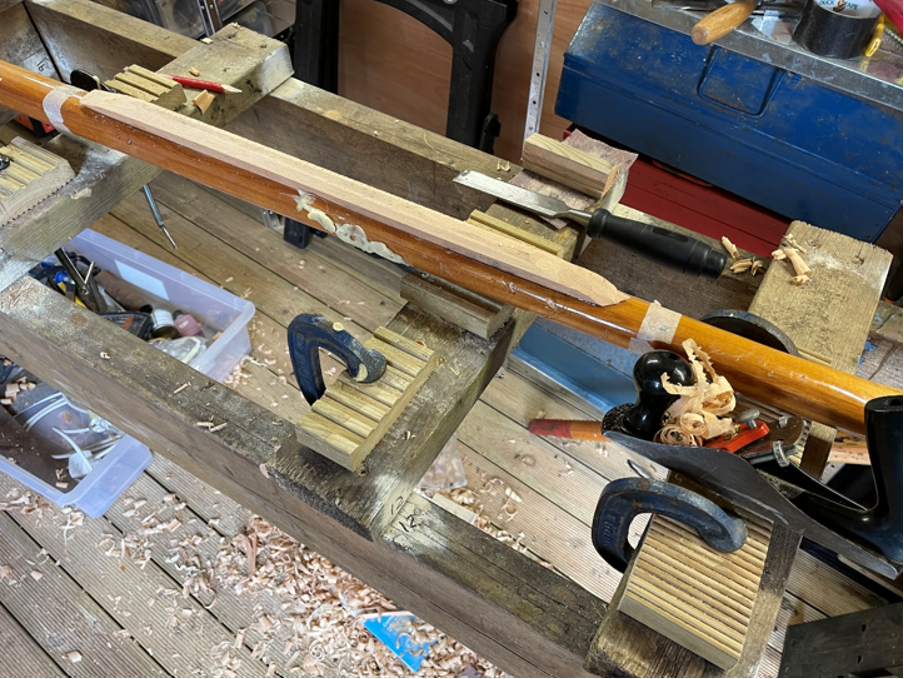
6. When happy that it is a good fit, glue in place, again securing to the pattern on the fast back. Where later wood is to be removed do not glue those parts.
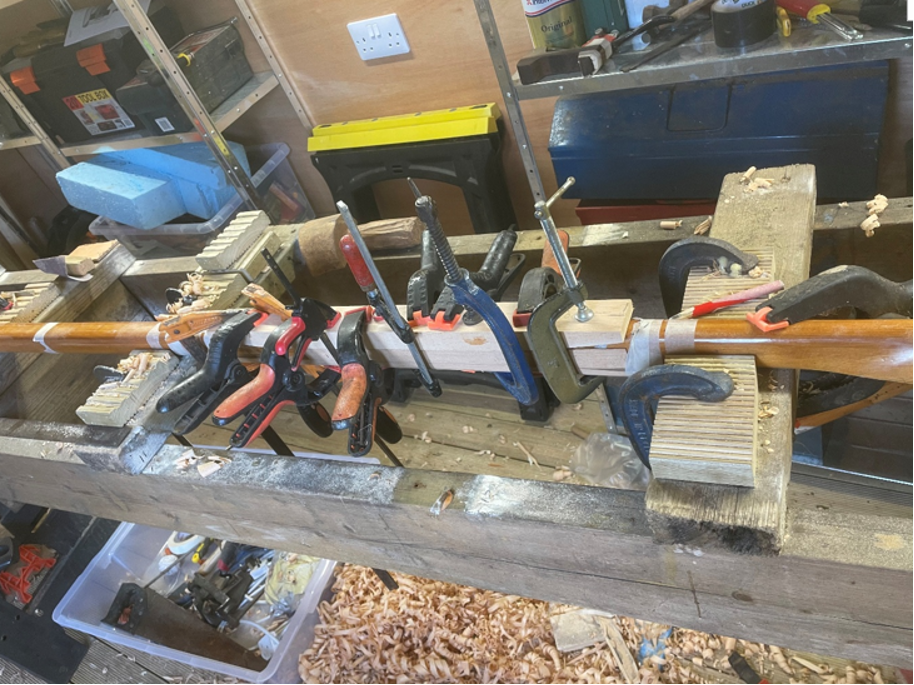
7. Repeat this process as many times as necessary to form a new loom all round. At each stage glue up and make sure the blade is secured in the pattern.
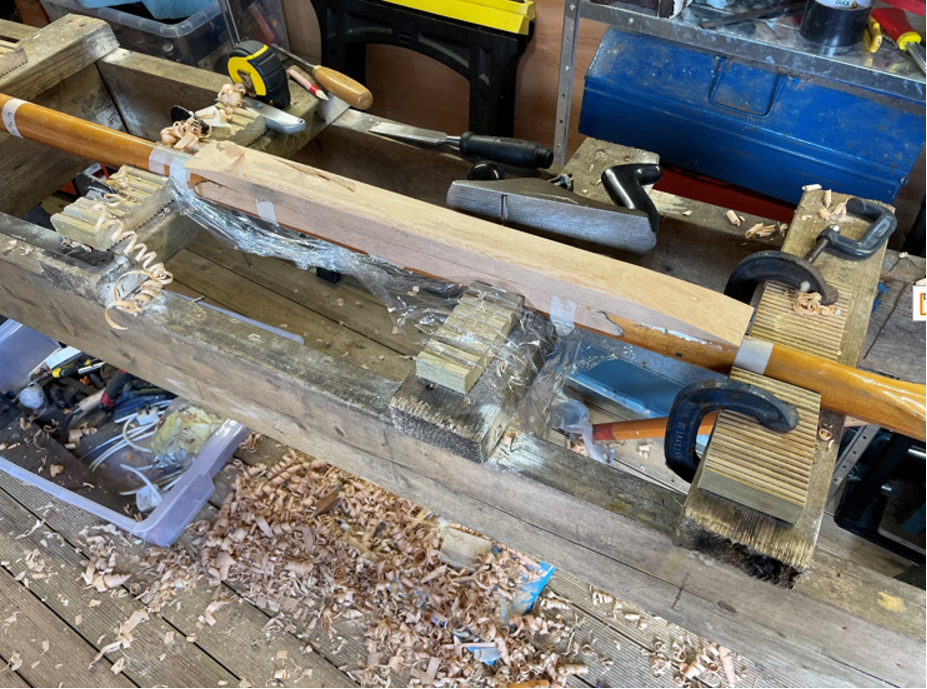
8. Once dry, the shape can then formed using the plane, perhaps the best part!
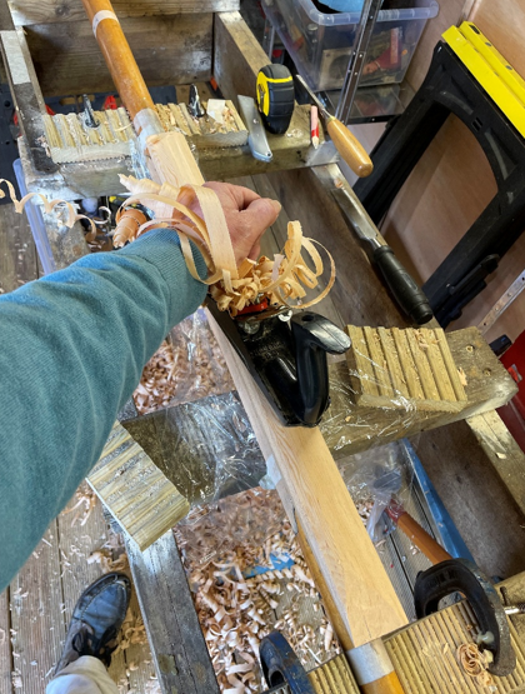
The idea is to try to recreate both the external and internal shape of the loom, which will be hollow outside of the leather area. This should help to maintain the balance of the blade and also the flex.